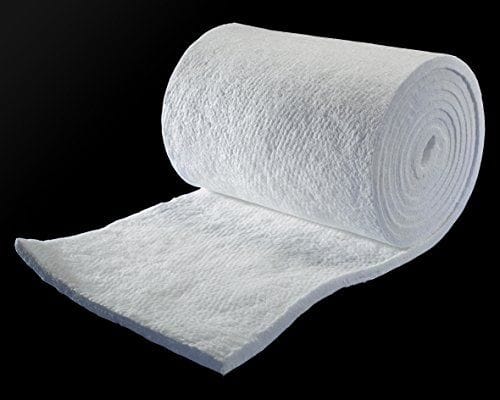
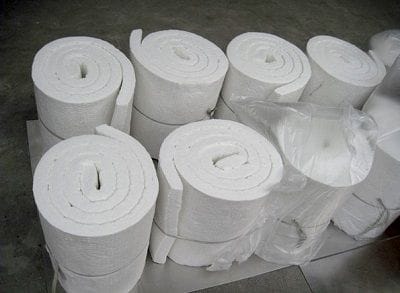
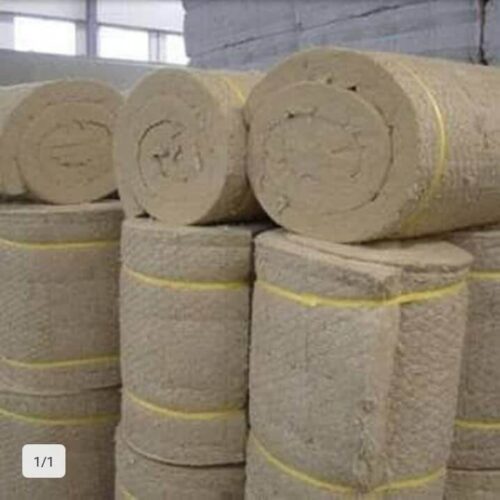
ceramic Fiber Blanket


High-density (128 kg/m^3), high-purity refractory insulation designed for extreme heat applications up to 1260^°C (2300^°F).

  • High Thermal Stability: Excellent resistance to thermal shock and direct flame contact.

  • Energy Efficient: Low heat storage and thermal conductivity minimize heat loss.

  • Durable Construction: Double-needled without organic binders for enhanced handling strength.

  • Key Applications: Ideal for industrial furnace linings, kilns, forge insulation, boilers, and high-temperature pipe wrapping.

    • Density: ()

    • Max Temperature: ()

    • Features: Asbestos-free, fireproof, flexible, low thermal mass

    • Available Sizes: 7260×610mm×25mm or                 3600mm×610mm×50mm

A Ceramic Fiber Blanket (also known as an aluminosilicate fiber blanket) is a high-temperature refractory insulation material manufactured from long, spun or blown high-purity alumina-silica fibers. Double-needled without organic binders to enhance handling strength and thermal integrity, it remains resilient under extreme thermal conditions.

 Our Key Technical Specifications

  • Composition: Typically 44%-55% Alumina ( Al2O3) and Silica (SiO2), with zirconia (ZrO2) added in ultra-high-temperature grades.
  • Temperature Ratings:
    • Standard Grade: Up to 1050°C
    • High-Purity (HP) Grade: Up to 1260°C (2300°F)
    • Zirconia (HZ) Grade: Up to 1430°C ( 2600°F)
  • Densities: Available standard density is 128kg/m3 

    being the most common.
  • Thicknesses: Typically 25mm ( 1 inch) and 50mm ( 2 inch)
  • Thermal Conductivity: Low thermal conductivity ( typically around 0.12 to 0.20W/m. K at elevated temperatures), significantly reducing heat loss.
  • Tensile Strength: Typically around 0.05-0.06Mpa.

  . Available sizes: 7260mm×610mm×25mm 

                                     3600mm×610mm×50mm     


Major Features & Advantages

  1. High Thermal Shock Resistance: Withstands rapid temperature fluctuations without cracking, warping, or losing structural strength.
  2. Low Heat Storage: Low thermal mass allows equipment like furnaces and kilns to heat up and cool down faster, saving energy.
  3. Chemical Resistance: Highly resistant to most chemicals and corrosive agents (except hydrofluoric/phosphoric acids and strong alkalis).
  4. Asbestos-Free & Non-Combustible: Fully fireproof, non-flammable, and acts as a fire barrier.
  5. Flexibility & Workability: Soft, flexible, and easily cut with a utility knife to fit around pipes, curved surfaces, and irregular vessel shapes.

Primary Applications

  • Industrial Furnaces & Kilns: Lining for hot faces, backup insulation, door seals, and expansion joints in heat-treating, glass, steel, and ceramics industries.
  • Pipe & Duct Insulation: High-temperature steam pipes, exhaust ducts, and power generation piping.
  • Fire Protection & Heat Shields: Automotive exhaust insulation, marine bulkheads, and structural fire barriers.
  • Boilers & Incinerators: Wall insulation, stack linings, and field steam generators.
  • Blacksmithing & Commercial Use: Forge linings, pizza ovens, wood stoves, and stress-relieving weld blankets.
  • Petrochemical equipment.
  •  Industrial ovens.

Installation & Handling Guidelines

  • Cutting & Fastening: Cut using a sharp utility knife and straightedge. Fasten to surfaces using stainless steel or ceramic anchor pins, metal clips, high-temperature sodium silicate adhesives, or wire mesh wrapping for pipes.
  • Joints: Install with tight, staggered seams between layers to prevent thermal bridging.
  • Safety Gear: Wear protective equipment during installation (dust mask/respirator, safety goggles, long sleeves, and gloves) to prevent temporary skin and respiratory irritation caused by loose airborne fibers.