Email:
info@isothermalengineering.co.ke
Phone:
+254 720 686 454
Location:
KCB Building, Enterprise Road, Industrial Area
Nairobi, Kenya
Email:
info@isothermalengineering.co.ke
Phone:
+254 720 686 454
Location:
KCB Building, Enterprise Road, Industrial Area
Nairobi, Kenya

What Is Fiberglass Blanket Insulation?
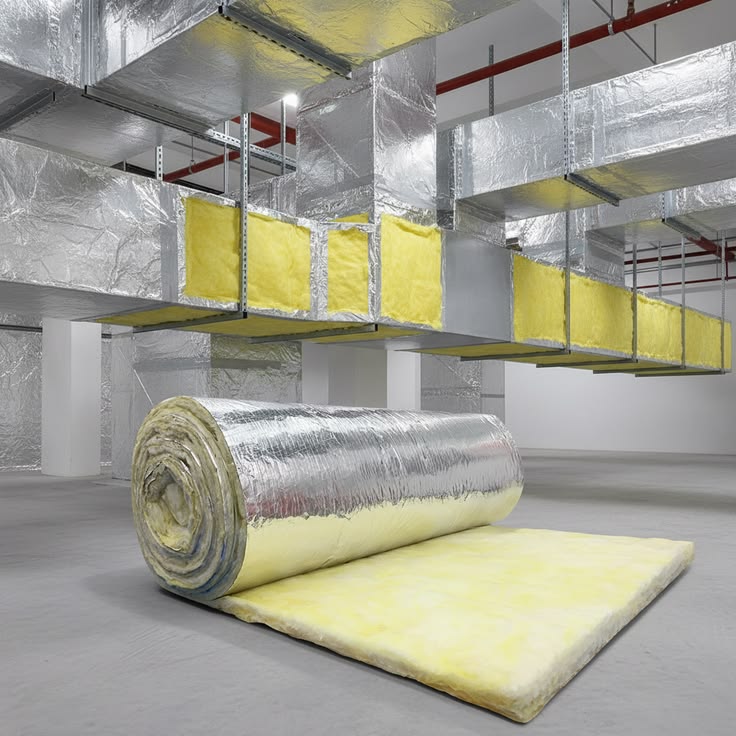
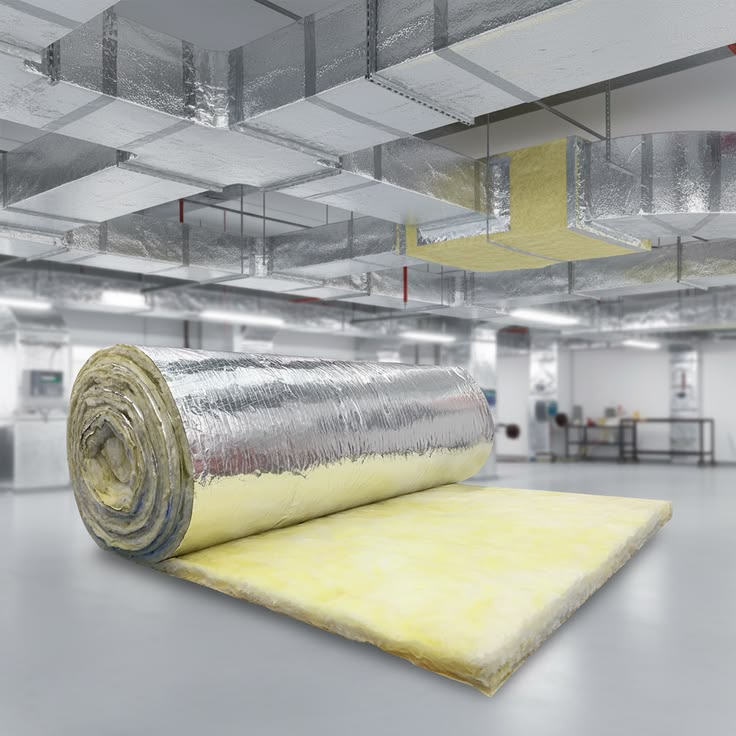
Fiberglass blanket insulation is a flexible, mat-formed insulation made of fine woven glass fibers, used to control heat transfer, dampen sound, and slow fire spread. It’s manufactured in continuous rolls or batts and compresses for shipping, then springs back to full thickness on installation.
The material works by trapping air pockets between glass fibers, which slows conductive and convective heat flow. This makes it effective for three core functions: thermal insulation, acoustic dampening, and fire resistance (Class A fire ratings are common for facing options).
Two very different markets use the same base material, which is why search results for “fiberglass blanket” split sharply between home insulation and industrial equipment wraps.
| Attribute | Residential/Commercial | Industrial High-Temp |
|---|---|---|
| Form | Rolls/batts, cut to stud/joist widths | Custom-sewn, removable/reusable jackets |
| Application | Attics, walls, HVAC ducts | Pipes, valves, turbines, exhaust systems |
| Temperature range | Up to ~180°F (82°C) service | Up to 1,000°F (540°C) continuous |
| Install method | Stapled or friction-fit, permanent | Wrapped, strapped, or Velcro-secured, removable |
| Primary goal | Energy code compliance, comfort | Process heat retention, personnel safety, condensation control |
R-value per inch: Standard fiberglass blanket insulation delivers approximately R-2.9 to R-3.8 per inch, depending on density and manufacturing process. Higher-density batts (used in 2×4 vs. 2×6 wall cavities) push toward the higher end of that range.
Density: Typical residential blankets run 0.5–1.0 lb/ft³; industrial high-temp blankets are denser (up to 6–8 lb/ft³) to hold shape under vibration and repeated removal/reinstallation.
Temperature ratings: Residential-grade fiberglass is rated for standard building envelope temperatures. Industrial blankets are rated for continuous operating temperatures up to 1,000°F (540°C), with some formulations rated higher for intermittent exposure.
Choose faced insulation when the cavity needs a built-in vapor barrier and a stapling flange for attachment — typically exterior walls and unfinished basements in cold climates. Choose unfaced when insulation is going into an already-enclosed cavity, over existing insulation, or where local code requires a separate vapor barrier.
| Faced (Kraft/Foil) | Unfaced | |
|---|---|---|
| Best Use Case | Exterior walls, ceilings, first-layer attic install | Interior partition walls, sound dampening, re-insulation over existing batts |
| Vapor Barrier Function | Yes — Kraft paper or foil facing blocks moisture migration | No — requires separate poly vapor barrier if needed |
| Fire Class Rating | Kraft facing is combustible (cover per code); foil-scrim-kraft (FSK) often meets Class A | Glass fiber itself is non-combustible; no facing to rate |
| Typical Installation Location | Exterior-facing cavities, cold-climate builds | Interior walls, floors, crawlspaces, layered attic applications |
Industrial fiberglass blankets are engineered for continuous heat resistance up to 1,000°F (540°C), well beyond what residential-grade material can tolerate. They’re built from higher-density glass fiber mat, often reinforced with a wire mesh or fabric scrim, and finished with grommets, hooks, or hook-and-loop closures for removability.
Typical applications include removable valve covers, turbine wraps, and exhaust duct insulation — anywhere equipment needs periodic access for maintenance or inspection without cutting into permanent insulation.
The key advantage for plant engineers is threefold: energy conservation (reducing radiant heat loss cuts fuel and utility costs), condensation control (keeping surface temperatures above dew point on chilled or process lines), and personal protection against contact burns on exposed hot surfaces — a common OSHA and safety-audit concern in plant environments.
| Length | Width | Thickness | Density |
|---|---|---|---|
| 10 m | 1.2 m | 50 mm | 48 kg/m³ |
| 10 m | 1.2 m | 100 mm | 48 kg/m³ |
| 15 m | 1.2 m | 50 mm | 48 kg/m³ |
| 20 m | 1.2 m | 50 mm | 24 kg/m³ |
What is fiberglass blanket insulation?
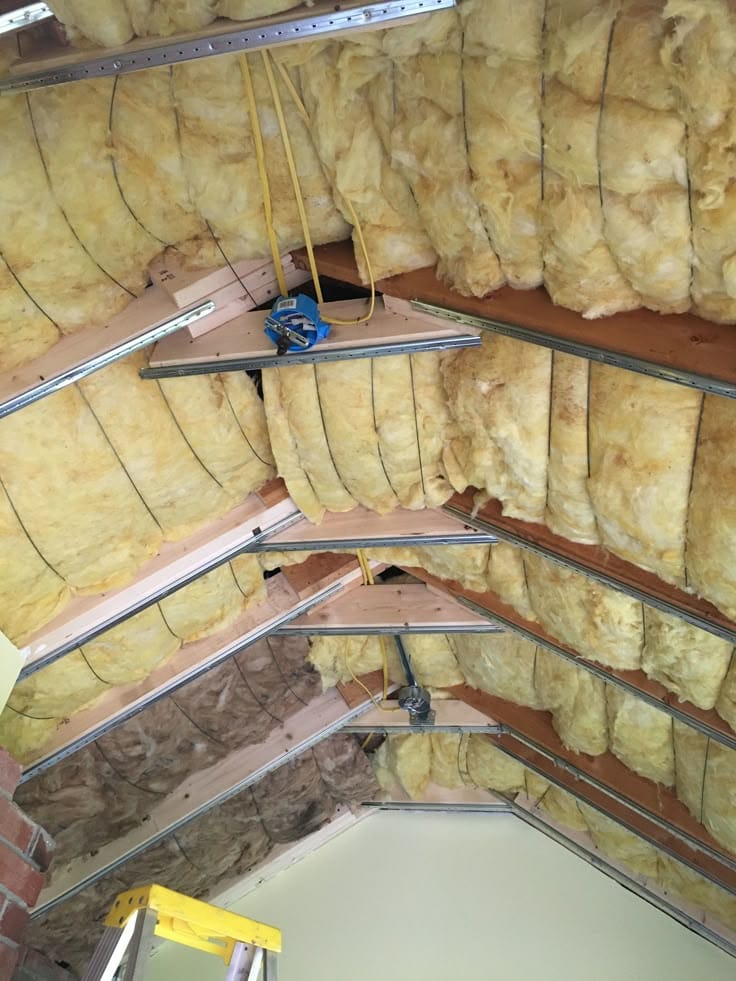
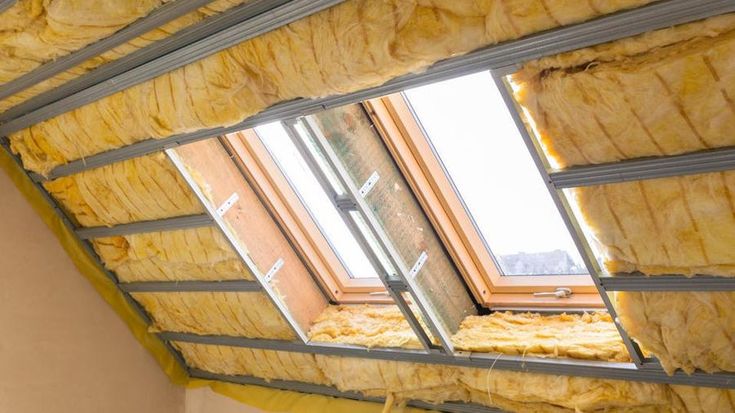
Fiberglass blanket insulation is a flexible mat of woven glass fibers used to control heat transfer, reduce noise, and slow fire spread. It’s manufactured in continuous rolls and compresses for shipping, then expands to full thickness on installation in walls, attics, ducts, or industrial equipment.
What is the R-value of a fiberglass blanket per inch?
Fiberglass blanket insulation typically provides an R-value of about 2.9 to 3.8 per inch, depending on density and manufacturing type. Higher-density batts fall toward the upper end. Actual performance depends on proper installation at full loft, without compression, in the cavity being insulated.
Is fiberglass blanket insulation fireproof?
Fiberglass blanket insulation itself is non-combustible glass fiber, but “fireproof” depends on facing. Unfaced fiberglass resists ignition directly. Kraft-faced products are combustible and require code-compliant coverage, while foil-scrim-kraft (FSK) facings often achieve Class A fire ratings.
Can fiberglass insulation blankets get wet?
Fiberglass blanket insulation can get wet, but moisture significantly reduces its R-value and can promote mold growth if it doesn’t dry out. Wet fiberglass insulation should be dried thoroughly or replaced. Vapor barriers and proper facing choice help prevent moisture intrusion in the first place.
What size does fiberglass blanket insulation come in?
Fiberglass blanket insulation is typically supplied in rolls 1.2 m wide. The 10 m roll comes in 50 mm or 100 mm thickness, the 15 m roll comes in 50 mm thickness, and the 20 m roll comes in 50 mm thickness, at densities of 24–48 kg/m³.
What is fiberglass blanket insulation used for?
Fiberglass blanket insulation is used for thermal insulation in attics, walls, and HVAC ducts; industrial insulation on pipes, tanks, boilers, and turbines; acoustic control in machinery enclosures and partition walls; fire protection in rated assemblies; and condensation control on chilled piping.
What is the difference between faced and unfaced fiberglass blanket insulation?
Faced fiberglass blanket includes a Kraft paper or foil layer that acts as a vapor barrier and attachment flange, used mainly in exterior walls. Unfaced fiberglass blanket has no vapor barrier and suits interior cavities, sound dampening, or layering over existing insulation.
How thick should fiberglass blanket insulation be?
Thickness depends on the required R-value and application. Residential walls typically use 3.5″–6.25″ (R-13 to R-21), attics use 8″–12″ (R-25 to R-38), while industrial blankets range from 25 mm to 100 mm depending on the temperature differential being managed.
What temperature can fiberglass blanket insulation withstand?
Residential-grade fiberglass blanket is rated for standard building envelope temperatures, generally under 180°F (82°C). Industrial high-temperature fiberglass blankets withstand continuous operating temperatures up to 1,000°F (540°C), making them suitable for pipes, turbines, and exhaust systems.
Does fiberglass blanket insulation reduce noise?
Yes. Fiberglass blanket insulation absorbs airborne sound in HVAC ducts, machinery enclosures, and partition walls. Its fibrous structure traps sound energy, making it effective for reducing mechanical noise, impact sound between floors, and general acoustic transfer in both residential and industrial settings.
Is fiberglass blanket insulation safe to handle?
Fiberglass blanket insulation requires PPE to handle safely — gloves, long sleeves, eye protection, and a dust mask — since airborne glass fibers can irritate skin, eyes, and lungs. It’s non-toxic and doesn’t off-gas, but direct contact and inhalation of fibers should be avoided.
What density is fiberglass blanket insulation?
Fiberglass blanket insulation density typically ranges from 12 to 96 kg/m³ depending on the product line. Higher density generally means better structural integrity, higher R-value per inch, and improved sound absorption, making it suitable for demanding industrial or acoustic applications.
1. Clearly defined product specifications
Clients get exact roll dimensions and density for every product — 10 m, 15 m, and 20 m lengths at a fixed 1.2 m width, in 50 mm or 100 mm thickness, at 24–48 kg/m³ density. This lets engineers calculate thermal performance and order the correct spec the first time, rather than working from vague “standard insulation” claims.
2. Density matched to application
Offering both 24 kg/m³ and 48 kg/m³ density options lets clients choose lighter material for general-purpose insulation or higher-density material for applications needing better structural integrity, higher R-value, or improved acoustic performance — without switching suppliers.
3. Continuous roll lengths reduce installation waste and joints
Supplying in 10–20 m continuous rolls (rather than small precut sheets) means fewer seams across large runs of pipe, duct, or wall cavity — fewer joints mean fewer thermal bridging points and faster installation.
4. Multi-application coverage from one product line
The same core material supports thermal insulation, acoustic dampening, condensation control, and fire resistance — so clients across residential, commercial, and industrial/mechanical sectors can source from a single supplier rather than juggling multiple vendors for different needs.
5. Specialist positioning
As a dedicated fiberglass blanket material supplier, Isothermal Mechanical Engineering Limited can offer sizing and density guidance a general building-materials retailer typically doesn’t provide.
Contact Isothermal Mechanical Engineering Limited
Isothermal Mechanical Engineering Limited supplies fiberglass insulation blankets to customers across Kenya and the surrounding region, serving both residential/commercial builders and industrial/mechanical engineering clients.
Phone: +254 722 943 097
Email:info@isothermalengineering.co.ke
Products: Fiberglass insulation blanket rolls — 10 m, 15 m, and 20 m lengths, 1.2 m width, 50 mm–100 mm thickness, 24–48 kg/m³ density.
