Email:
info@isothermalengineering.co.ke
Phone:
+254 720 686 454
Location:
KCB Building, Enterprise Road, Industrial Area
Nairobi, Kenya
Email:
info@isothermalengineering.co.ke
Phone:
+254 720 686 454
Location:
KCB Building, Enterprise Road, Industrial Area
Nairobi, Kenya

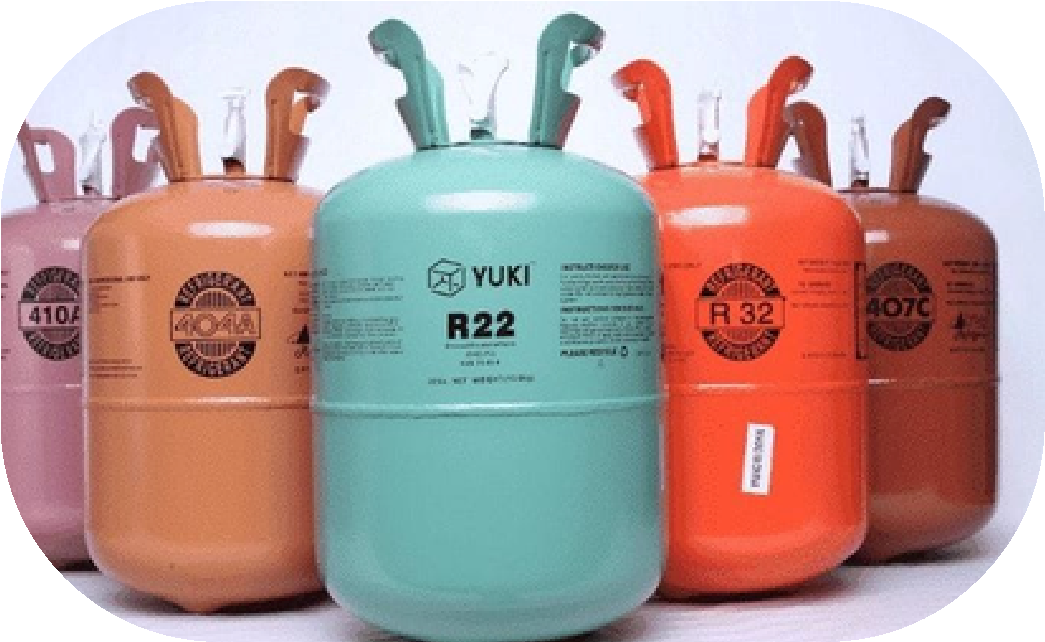
Refrigerants are essential working fluids in refrigeration and air conditioning systems. They circulate through a system to absorb heat from one location and release it elsewhere, allowing refrigerators, cold rooms, freezers and air conditioners to produce cooling.
For HVAC technicians, refrigeration contractors, facility managers and businesses, choosing the correct refrigerant is critical.
Common refrigerants available for different refrigeration and air conditioning applications include R-134a, R-404A, R-407C, R-410A and R-32.
If you are looking for refrigerant gases in Kenya, it is important to understand that different refrigerants are designed for different applications.

A refrigerant is a substance used in a refrigeration cycle to transfer heat.
In a typical vapour-compression system, refrigerant passes through several stages:
During evaporation, the refrigerant absorbs heat from the cooled space. It then releases that heat during condensation.
The process repeats continuously while the refrigeration system operates.
R-134a has historically been widely used in refrigeration and air conditioning applications, including certain automotive and commercial refrigeration systems.
Its suitability depends on the specific equipment and manufacturer’s design.
When servicing equipment that uses R-134a, technicians should verify that the system is designed for this refrigerant before charging or replacing refrigerant.
R-404A has been widely associated with commercial refrigeration applications, including systems requiring low- and medium-temperature refrigeration.
Applications have included:
However, refrigerant selection should consider current environmental requirements and the equipment manufacturer’s specifications.
R-407C is commonly associated with air conditioning and medium-temperature refrigeration applications.
It may be found in systems designed around its pressure-temperature characteristics.
When servicing an existing system, technicians should always confirm the refrigerant specified for the equipment rather than selecting a replacement based only on availability.
R-410A has been widely used in air conditioning equipment.
It operates at relatively high pressures compared with some older refrigerants, which means equipment, tools and components must be suitable for the refrigerant.
Applications can include:
Technicians must use equipment and procedures appropriate for the system’s operating pressure.
R-32 is used in modern air conditioning equipment and has gained attention as manufacturers move toward refrigerants with lower global warming impact than some older alternatives.
R-32 systems require equipment specifically designed for R-32.
Because refrigerants can have different safety classifications and operating characteristics, technicians should follow the manufacturer’s service procedures.
There is no universal refrigerant that is suitable for every refrigeration or air conditioning system.
The correct choice depends on:
Never replace one refrigerant with another simply because the alternative is readily available.
The system must be designed or approved for the refrigerant being used.
The quality and authenticity of refrigerant can affect system performance.
Poor-quality or contaminated refrigerant may contribute to:
For this reason, refrigeration contractors should source refrigerants from reliable suppliers.
Cold rooms require refrigerants suitable for their operating temperature and refrigeration system design.
A cold-room application may require different operating conditions from a standard air conditioning system.
The appropriate refrigerant therefore depends on the complete refrigeration system, including:
Professional system design is important when selecting refrigerants for cold-room applications.
Refrigerants should be handled by trained personnel using appropriate equipment and procedures.
Important practices include:
Technicians should also follow applicable Kenyan requirements and recognized industry practices when handling refrigerants.
When sourcing refrigerant gas in Nairobi, buyers should provide the supplier with the exact refrigerant required.
For example, instead of simply requesting “AC gas,” specify whether the system requires:
This reduces the risk of purchasing an incompatible product.
Trusted Partners:
Isothermal Engineering supplies refrigeration and HVAC products for customers in Kenya.
The company provides refrigerant gases including R-134a, R-404A, R-407C, R-410A and R-32, supporting different refrigeration and air conditioning applications.
Whether you are a refrigeration technician, HVAC contractor, business owner or facilities manager, selecting the correct refrigerant is an important part of maintaining reliable cooling equipment.
Refrigerant gases can be sourced from specialized refrigeration and HVAC suppliers. Always confirm the exact refrigerant required by the equipment.
Different air conditioners use different refrigerants. R-410A and R-32 are examples used in air conditioning equipment, but the correct refrigerant must always be confirmed from the equipment specifications.
R-32 should not simply be substituted for R-410A in an existing system. The equipment must be designed and approved for the refrigerant being used.
R-404A has been widely used in commercial refrigeration and low- and medium-temperature applications. Its suitability depends on the specific equipment and applicable requirements.
Check the equipment nameplate, installation manual or manufacturer’s documentation. A qualified technician can also identify the refrigerant specified for the system.
Refrigerant gases are fundamental to the operation of modern refrigeration and air conditioning systems. However, different refrigerants have different characteristics and applications.
R-134a, R-404A, R-407C, R-410A and R-32 should not be treated as interchangeable products. Always confirm the refrigerant specified by the equipment manufacturer before purchasing or charging a system.
For businesses and HVAC professionals searching for refrigerant gases in Kenya, Isothermal Engineering provides refrigeration and air conditioning products for a range of applications.