Email:
info@isothermalengineering.co.ke
Phone:
+254 720 686 454
Location:
KCB Building, Enterprise Road, Industrial Area
Nairobi, Kenya
Email:
info@isothermalengineering.co.ke
Phone:
+254 720 686 454
Location:
KCB Building, Enterprise Road, Industrial Area
Nairobi, Kenya

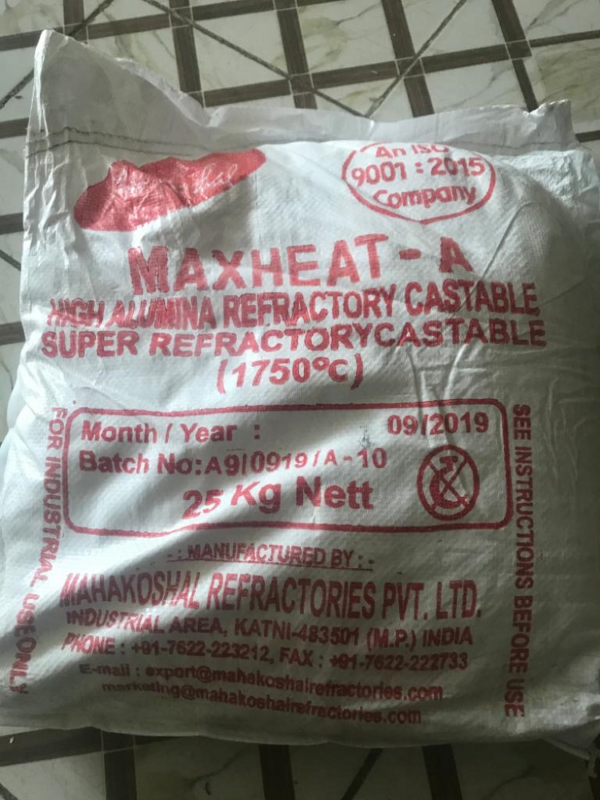
Applications of Maxheat A 1750°C Refractory Cement
Maxheat A can be used in a variety of applications where high-temperature resistance is required.
Common applications include:
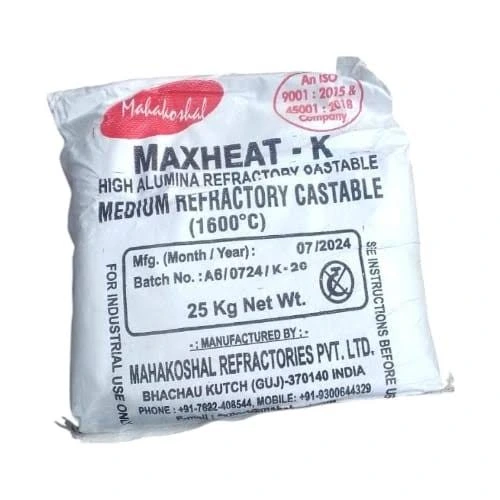
Maxheat A Refractory Cement is a high-temperature refractory material designed for applications where exceptional resistance to heat is required. With a rated temperature resistance of up to 1750°C, it is suitable for demanding industrial, commercial, and specialized high-temperature applications.
Unlike ordinary Portland cement, refractory cement is specifically formulated to withstand elevated temperatures without losing its structural integrity as quickly as conventional cement. Maxheat A can be used for refractory construction, repairs, jointing, and maintenance of high-temperature equipment and structures.
It is an ideal choice for applications involving furnaces, kilns, boilers, ovens, fireplaces, incinerators, foundries, and other heat-intensive installations, subject to the product’s technical specifications and recommended application conditions.
Maxheat A can be used in a variety of applications where high-temperature resistance is required.
Common applications include:
Furnaces and kilns operate under intense thermal conditions and require specialized materials to withstand repeated heating and cooling cycles. Maxheat A can be used in appropriate refractory construction and maintenance applications where high-temperature cement is required.
When used correctly, refractory cement can help create a heat-resistant barrier between high-temperature zones and the surrounding structural materials.
For furnace and kiln projects, the appropriate refractory product should be selected based on the operating temperature, thermal cycling, mechanical conditions, chemical environment, and equipment design.
Continuous exposure to high temperatures can cause refractory structures to crack, erode, or deteriorate over time. Damaged refractory joints and sections can reduce the effectiveness of an installation and may expose underlying materials to excessive heat.
Maxheat A provides a high-temperature refractory cement solution for suitable repair and maintenance applications. It can be used where a heat-resistant cement is required to restore or maintain appropriate refractory sections.
Before carrying out repairs, the damaged area should be properly prepared and all loose or deteriorated material removed. Installation should follow the manufacturer’s recommended preparation, application, curing, and drying procedures.
The 1750°C temperature rating makes Maxheat A suitable for demanding high-temperature environments where ordinary construction cement would not be appropriate.
Using a purpose-designed refractory cement can provide several advantages:
Ordinary cement is primarily designed for conventional construction applications and is not intended for continuous exposure to extreme temperatures. High heat can cause conventional cement-based materials to lose strength, crack, or deteriorate.
Refractory cement such as Maxheat A is specifically intended for high-temperature applications. Its formulation is designed to provide improved performance under elevated thermal conditions.
For this reason, selecting the correct refractory material is important when constructing or repairing furnaces, kilns, boilers, ovens, and other heat-intensive equipment.
Correct preparation and installation are essential when using high-temperature refractory cement. The finished material’s performance can be affected by factors such as mixing, water content, application thickness, curing, drying, and heating rate.
For best results:
For critical industrial applications, installation should be performed by qualified refractory or mechanical engineering professionals.
Although Maxheat A has a stated temperature rating of 1750°C, the actual suitability of the product depends on the specific application and operating conditions. Temperature rating alone should not be the only factor considered when selecting a refractory material.
Other factors may include:
Always check the manufacturer’s technical data sheet for the exact product specifications, recommended uses, mixing instructions, curing requirements, and operating limitations.
Looking for Maxheat A refractory cement in Nairobi for a furnace, kiln, boiler, oven, fireplace, incinerator, foundry, or other high-temperature application?
Isothermal Mechanical Engineering Limited supplies refractory materials for industrial, commercial, construction, maintenance, and mechanical engineering applications.
Maxheat A is a suitable option for projects requiring high-temperature refractory cement with a rated resistance of up to 1750°C, subject to the specific requirements of the application.
Contact Isothermal Mechanical Engineering Limited to enquire about Maxheat A availability, packaging, pricing, technical specifications, and suitability for your project.