| Property |
Specification |
Test Method |
| Blaine fineness |
3,600–4,400 cm²/g |
ASTM C204 |
| Residue at 90 microns |
< 8% |
— |
| Bulk density |
1.16–1.37 g/cm³ (72.4–85.5 lb/ft³) |
— |
| Specific gravity |
≈ 3.24 |
— |
| Flow at 15 min |
≥ 30% |
ASTM C1437 |
| Vicat initial set |
≥ 120 minutes |
Modified ASTM C191 (EN 196 sand mortar) |
| Vicat final set |
≤ 240 minutes |
Modified ASTM C191 |
| Pyrometric cone equivalent (neat paste) |
Cone 8–9 (≈ 1,271°C / 2,320°F) |
ASTM C24 |
Mechanical Properties — Compressive Strength
| Age |
Minimum Strength |
Test Method |
| 6 hours |
≥ 20.0 MPa (2,900 psi) |
ASTM C349 |
| 24 hours |
≥ 33.8 MPa (4,900 psi) |
ASTM C349 |
| 28 days (typical, undegraded) |
50–80 MPa |
EN 196-1 |
Note: EN 14647 requires initial set to occur no earlier than 90 minutes when tested per EN 196-3, distinguishing calcium aluminate cement from “flash-set” products despite its rapid strength gain after setting begins.
Heat of Hydration
Time Heat Released
6 hours 340 kJ/kg
24 hours 445 kJ/kg 5 days 445kJ/kg
This is notably higher and faster-releasing than Portland cement, which is a key consideration for mass-pour applications (risk of thermal cracking) but an advantage for cold-weather placement.
Thermal / Refractory Performance
Property Value
Softening/fusion resistance (neat paste) ≈ 1,271°C (2,320°F), PCE 8–9
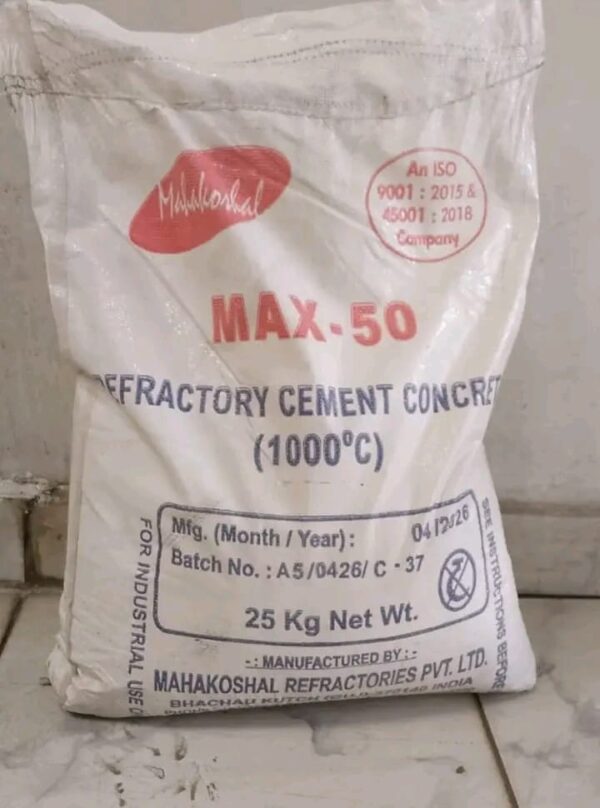
Service temperature 1000℃
Atmosphere restriction Not suitable for reducing atmospheres due to iron oxide content
Durability / Chemical Resistance
Exposure Performance
Sulfate attack Excellent resistance
Weak acids (pH > 4) Good resistance
Seawater / marine exposure Excellent
Efflorescence Minimal — does not release calcium hydroxide as a hydration product
Long-term conversion risk Hexagonal CAH₁₀/C₂AH₈ hydrates convert to cubic C₃AH₆ over time in warm/moist conditions, increasing porosity and reducing strength by up to 30–50% if not accounted for in design.
Key Advantages
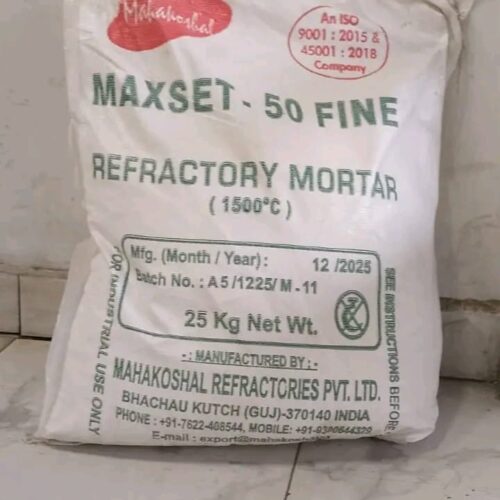
. Smooth, Fine-Grained Texture: Features a fine, consistent particle size that creates smooth mortar joints, seamless protective coatings, and dense refractory linings without heavy air voids.
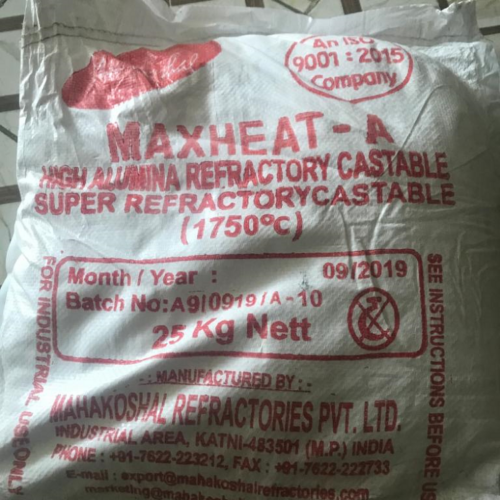
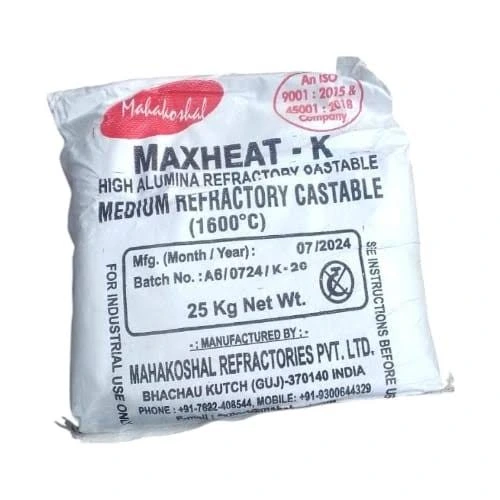
. High Heat & Thermal Resistance: Performs under continuous, high-temperature operations (Fondu Max 50 handles working thermal exposure up to 1,000°C–1,200°C, with higher-alumina variants taking up to 1,500°C) without losing structural integrity.
. Rapid Strength Gain & Fast Setting: Initial setting occurs within 2 to 4 hours, followed by rapid hardening—achieving high early compressive strength in as little as 6 to 24 hours. This drastically reduces equipment downtime during plant shutdowns.
. Thermal Shock Stability: Resistant to cracking, spalling, and deterioration caused by severe heating-cooling cycles or rapid furnace startups.
. Chemical & Corrosion Resistance: Resists acid attacks (pH ≥ 4), sulfates, alkalis, and aggressive wastewater environments where standard Portland cement degrades.
.Strong Bonding & Workability: Its smooth consistency offers superior adhesion for bonding firebricks, filling tight hairline joints, patching fine cracks, and troweling smooth protective layers.
. Cold-Weather Usability: Sets and hardens reliably in freezing temperatures down to -10°C, where conventional cements fail to hydrate properly.
. High Abrasion & Erosion Resistance: Hard, dense surface structure withstands heavy mechanical impact, wear, and physical erosion caused by high-velocity hot gases and particulate matter. Primary Applications
1. Refractory & High-Temperature Installations
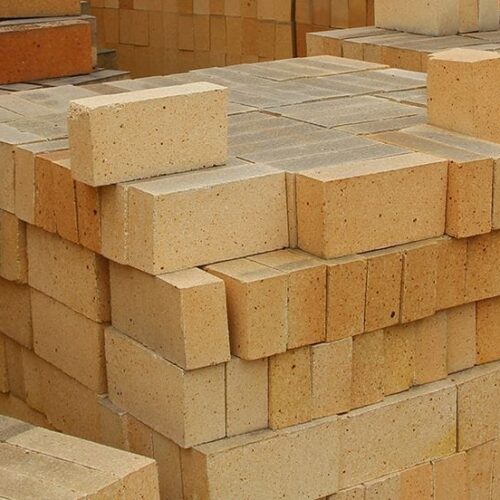
. Furnace & Kiln Linings: Used to lay firebricks, construct monolithic linings, and repair hot zones in industrial furnaces, brick kilns, forge furnaces, and heat treatment chambers.
. Boilers & Incinerators: Provides protective, heat-retaining linings and joint seals for boilers, biomass burners, and waste incinerators.
. Flues, Stacks & Chimneys: Mortars and coats flue linings, exhaust ducts, and industrial chimneys to resist hot gas streams and acidic condensate.
. Domestic & Commercial Heating: Used for firebrick jointing in pizza ovens, domestic fireplaces, outdoor fire pits, and wood stoves.
2. Maintenance & Rapid Industrial Patching
. Emergency Hot-Spot Repairs: Used to seal cracks, fill gaps, and patch eroded or spalled refractory castable sections during brief maintenance windows.
. Precast Refractory Shapes: Casts custom heat-resistant blocks, burner tiles, lintels, and furnace doors.
3. Special Heavy Construction & Chemical Infrastructure
. Sewerage & Industrial Infrastructure: Applied in chemical plants, industrial drains, pipe linings, and municipal wastewater systems exposed to mild acids and sulfuric acid corrosion.
. Rapid Floor & Deck Repairs: Used in heavy-duty industrial flooring, loading docks, and airport runways requiring rapid curing under heavy dynamic loads.